
Expertise without infrastructure
Scattered inquiries, repeated free advice, and complex coordination of bookings and payments.
I helped shape a two-sided travel marketplace concept connecting travelers seeking trusted local knowledge with creators and experts who could turn that knowledge into itineraries, tours, and consultations.
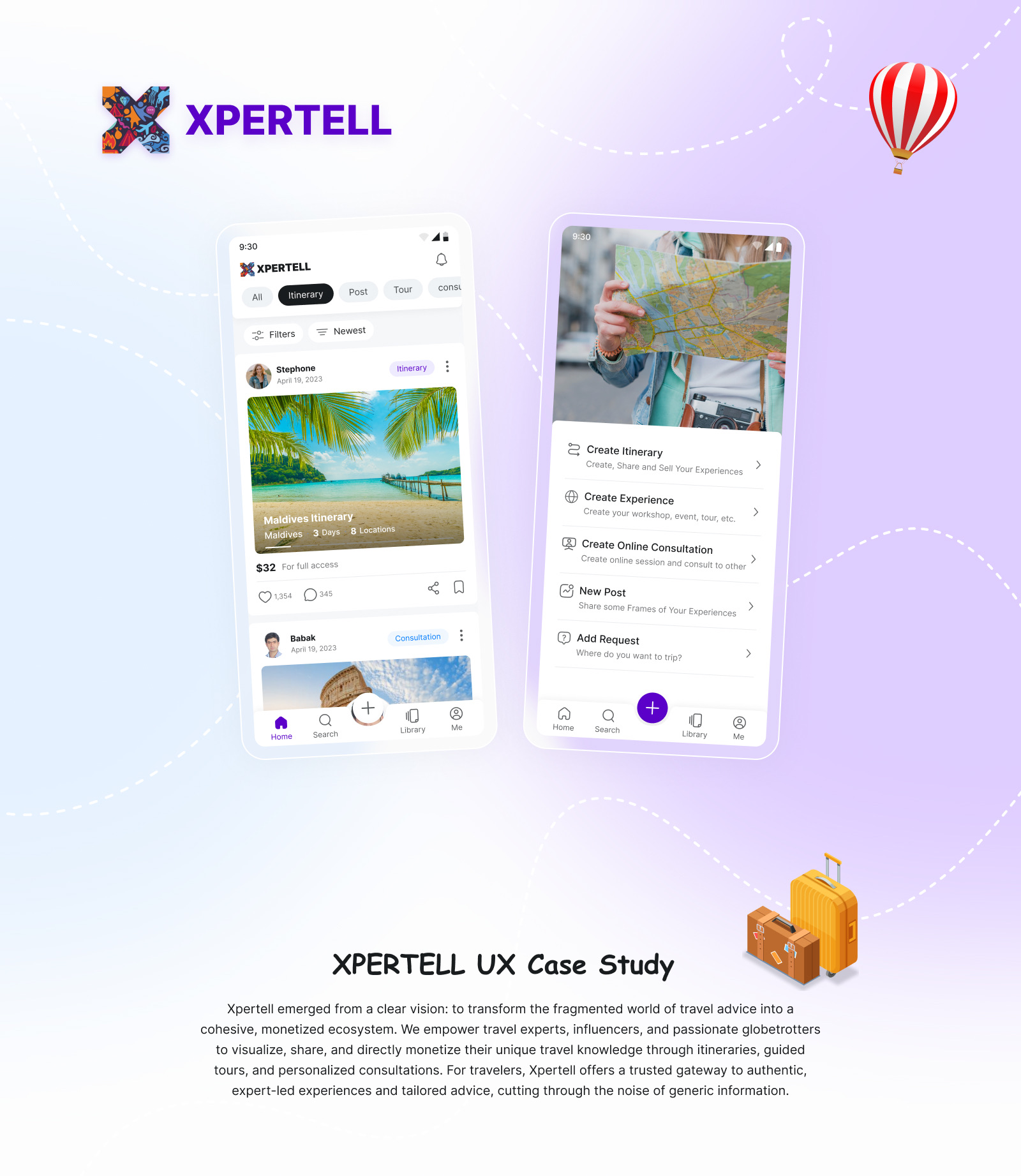
Travel creators and local experts were already answering questions, publishing recommendations, and planning experiences across disconnected channels—but had limited ways to turn that work into structured, bookable offerings.
Travelers, meanwhile, were navigating an overload of generic advice and uncertain sources when they needed relevant, trustworthy guidance.
PRODUCT QUESTIONHow might we give experts a practical way to package their knowledge while making it easier for travelers to discover, evaluate, and book personalized experiences?
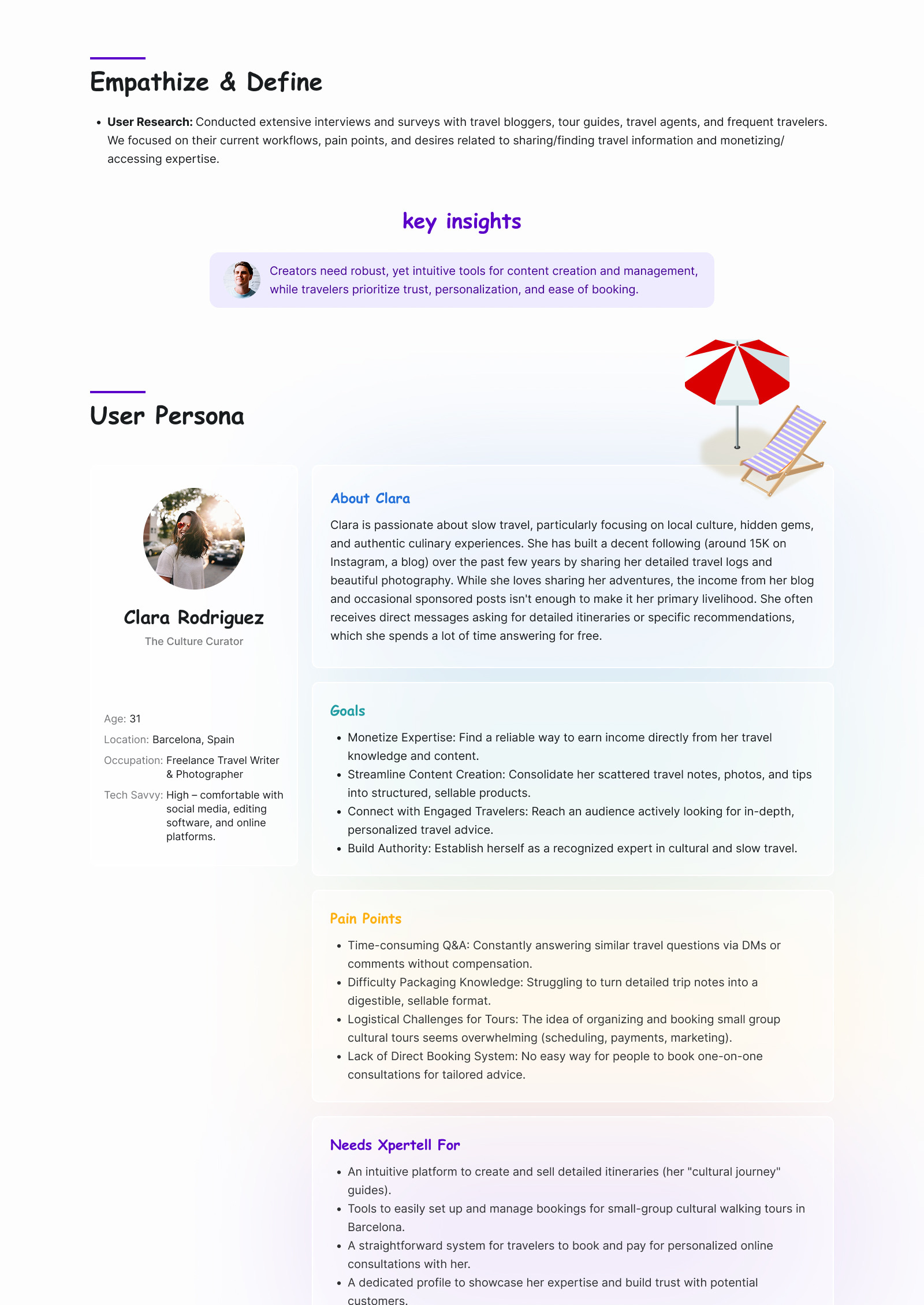
Scattered inquiries, repeated free advice, and complex coordination of bookings and payments.
Too much generic content, uncertainty about credibility, and difficulty finding unique expert-led experiences.
The documented discovery combined interviews and surveys with travel bloggers, tour guides, travel agents, and frequent travelers.
The recurring theme was not simply content discovery: creators needed workable tools and income opportunities, while travelers wanted trust, personalization, and easy booking.
Creators assemble travel plans with places, timing, transportation, estimated costs, and supporting content; travelers discover and acquire them.
Experts define and publish bookable tours with the information travelers need to evaluate the experience.
Travelers reserve one-to-one expert guidance for questions and plans that do not fit a pre-made itinerary.
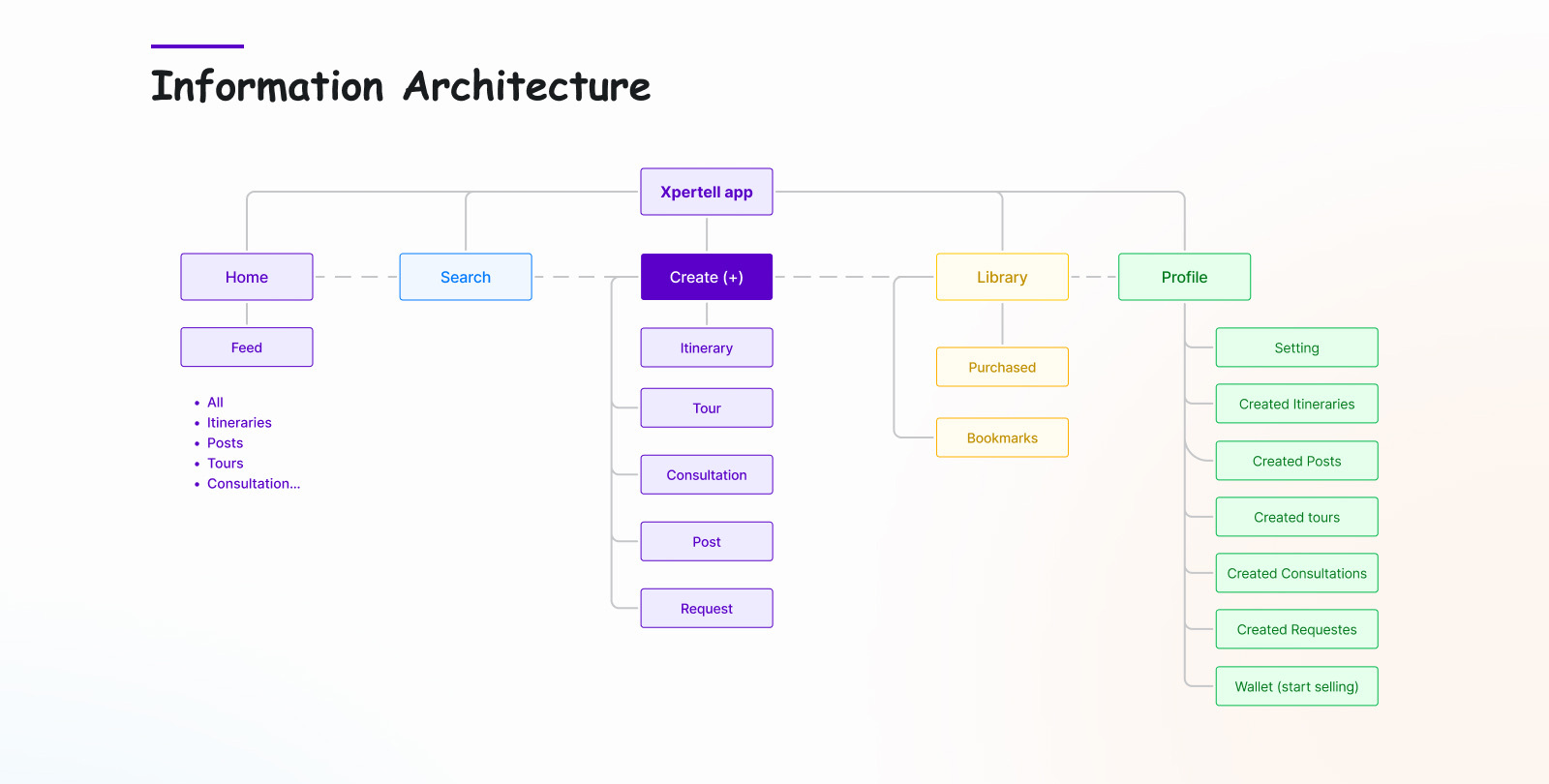
A social feed, search, saved library, and creator profile supported the proposed architecture. These are designed product concepts, not independently verified shipped functionality.
A core strategic challenge was supporting two modes: exploring travel content and publishing paid expertise. Feed and search sat beside a central creation entry point, with a library for acquired or saved material and a profile for creator management.
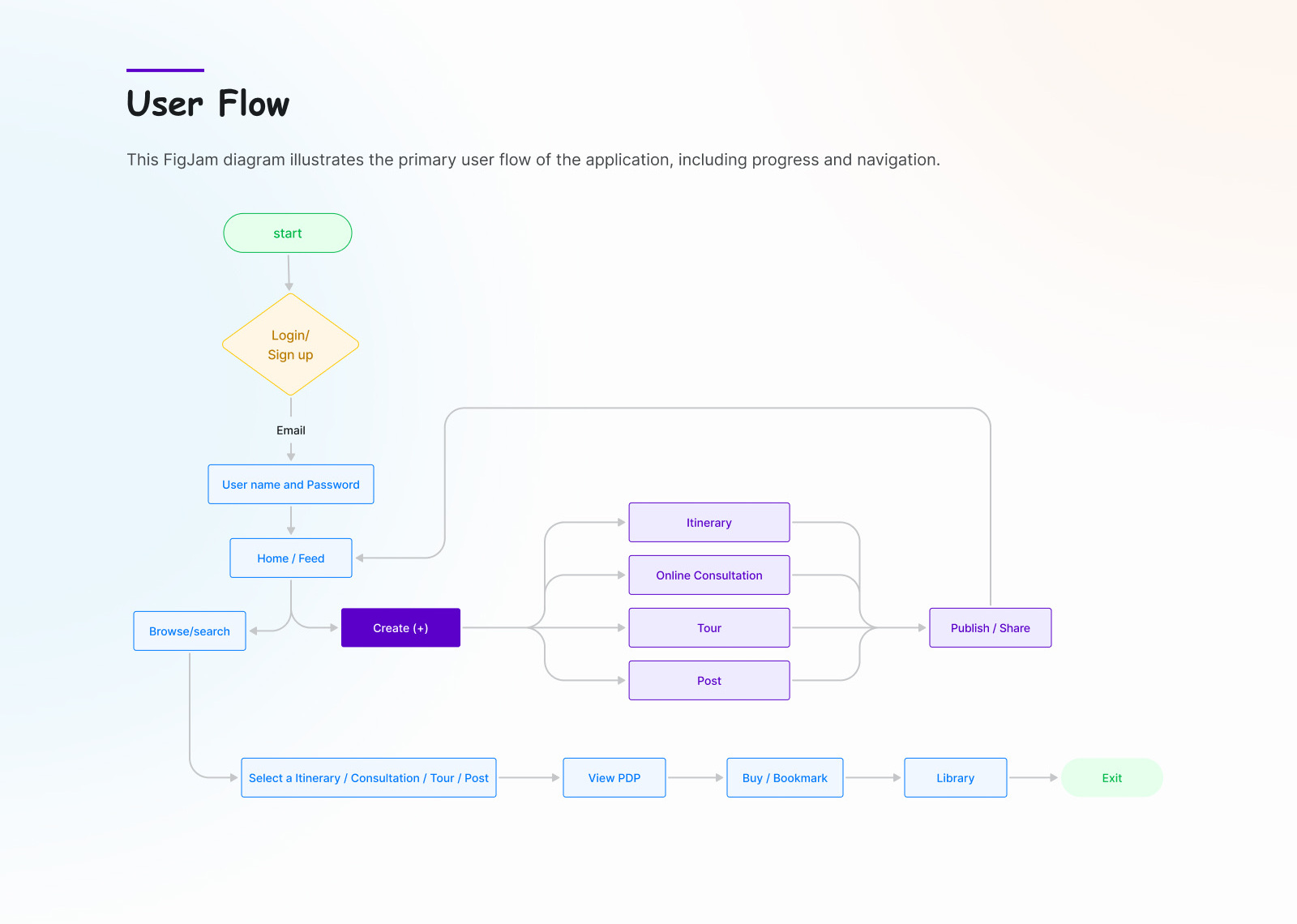
Mapping the paths from sign-in through creating, publishing, purchasing, and bookmarking gave a distributed team a shared structure for prototypes and product discussions.
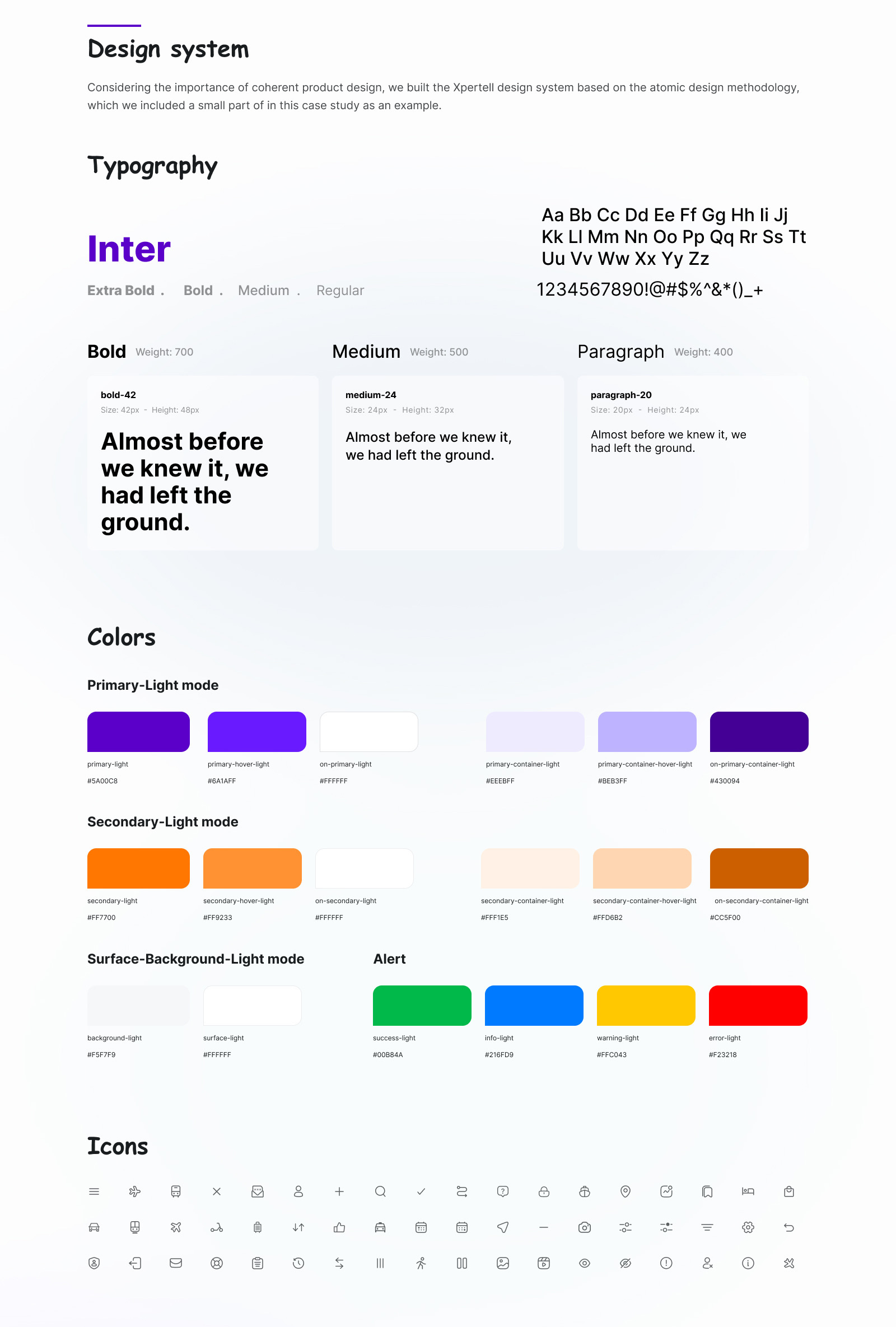
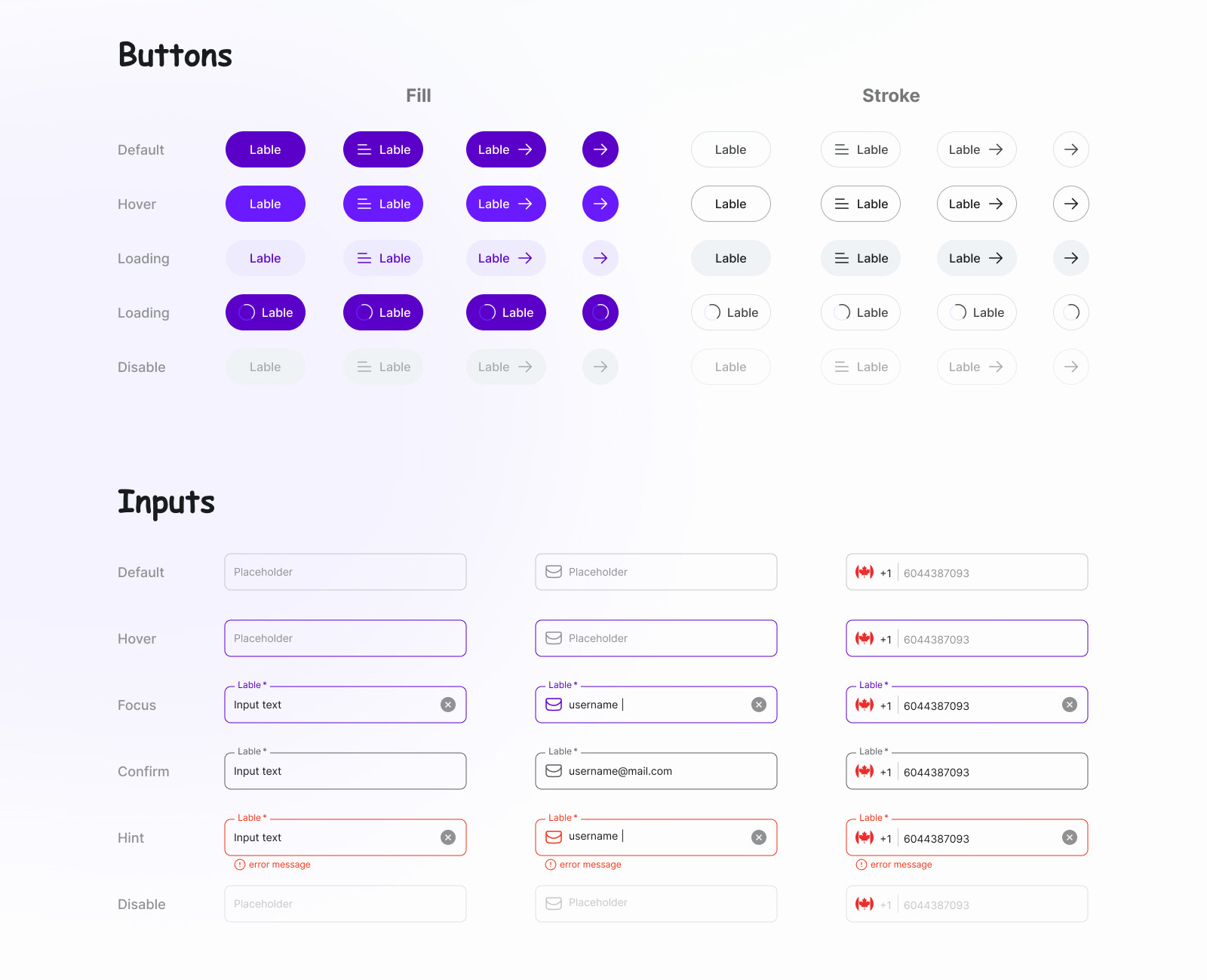
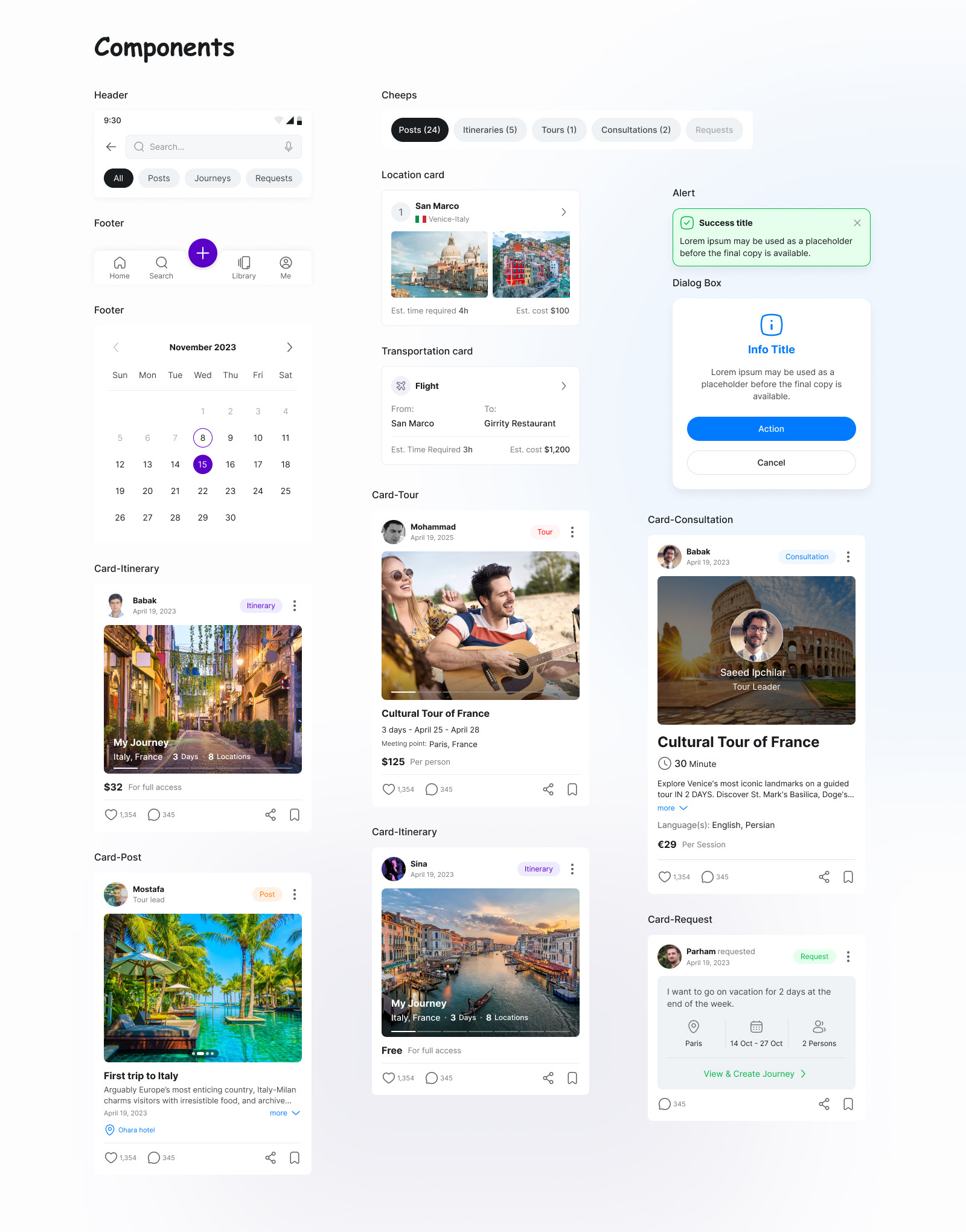
The design work translated the architecture into reusable interface patterns: type and color foundations, inputs, button states, navigation, and cards for itineraries, tours, consultations, posts, and requests.
A scalable Figma design system and structured documentation supported review and implementation discussions across a distributed team.
Design-scope figures from the original case study—not production deployment or measured business impact.
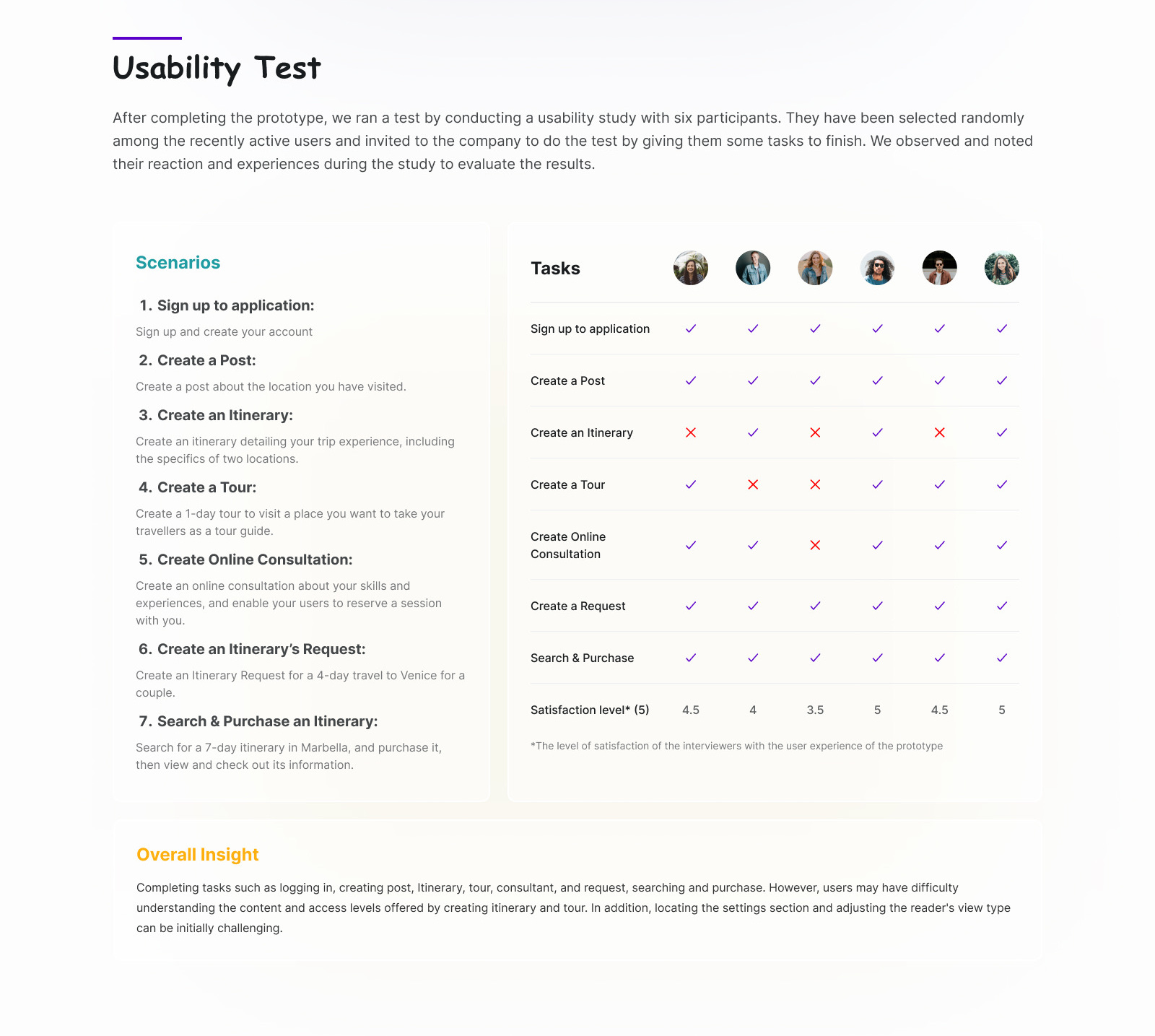
The case study documents usability testing with six participants completing tasks in the prototype. Sign-up, posting, requests, and search/purchase were the strongest results.
Creating an itinerary—the centerpiece of creator monetization—was successful for only half of participants, signaling room for further iteration.
| Prototype task | Participants completing task |
|---|---|
| Sign up to application | 6/6 |
| Create a Post | 6/6 |
| Create an Itinerary | 3/6 |
| Create a Tour | 4/6 |
| Create Online Consultation | 5/6 |
| Create a Request | 6/6 |
| Search & Purchase | 6/6 |
Observed completion counts in a six-person prototype study—not post-launch conversion, a statistically representative experiment, or evidence of commercial traction.
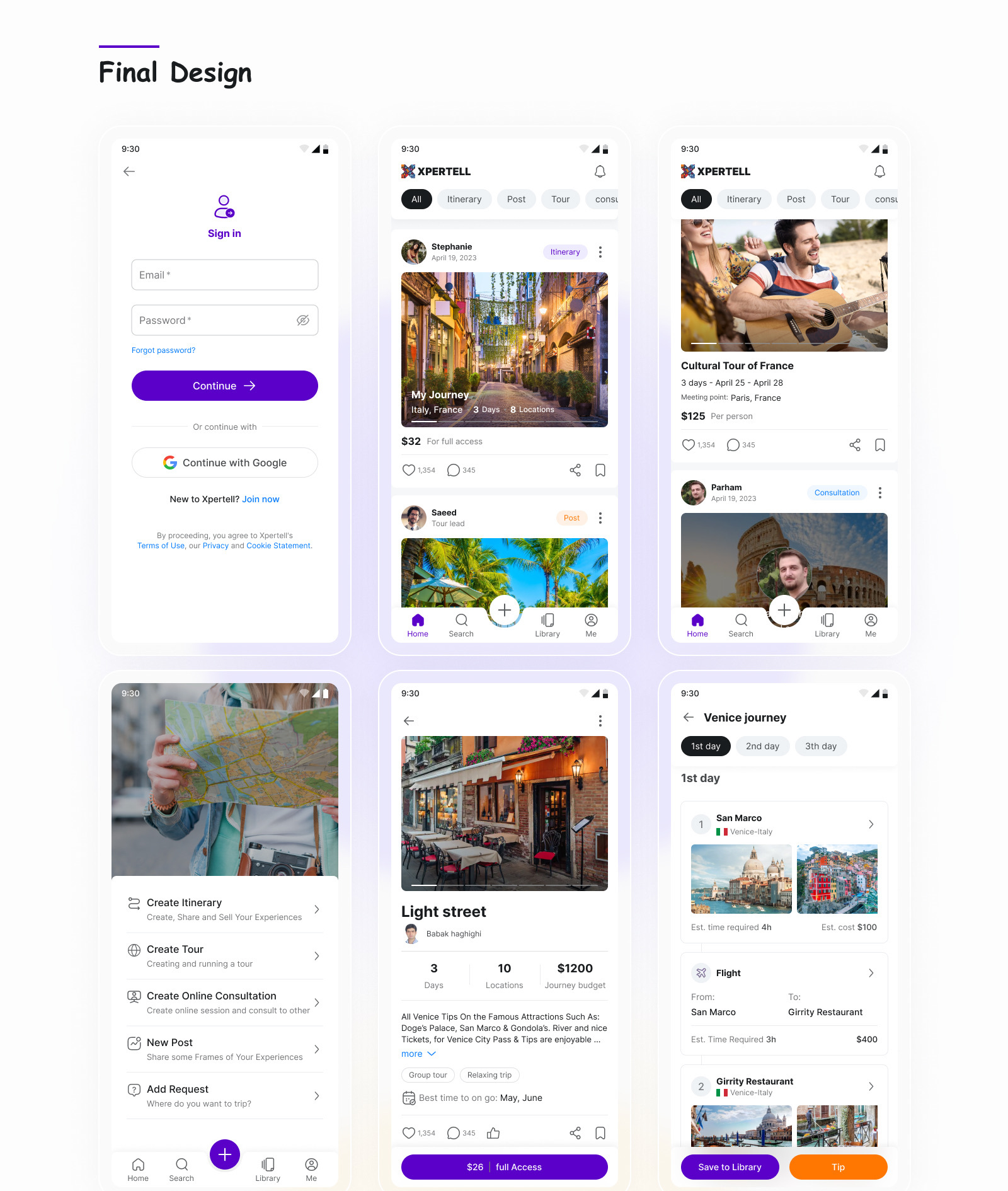
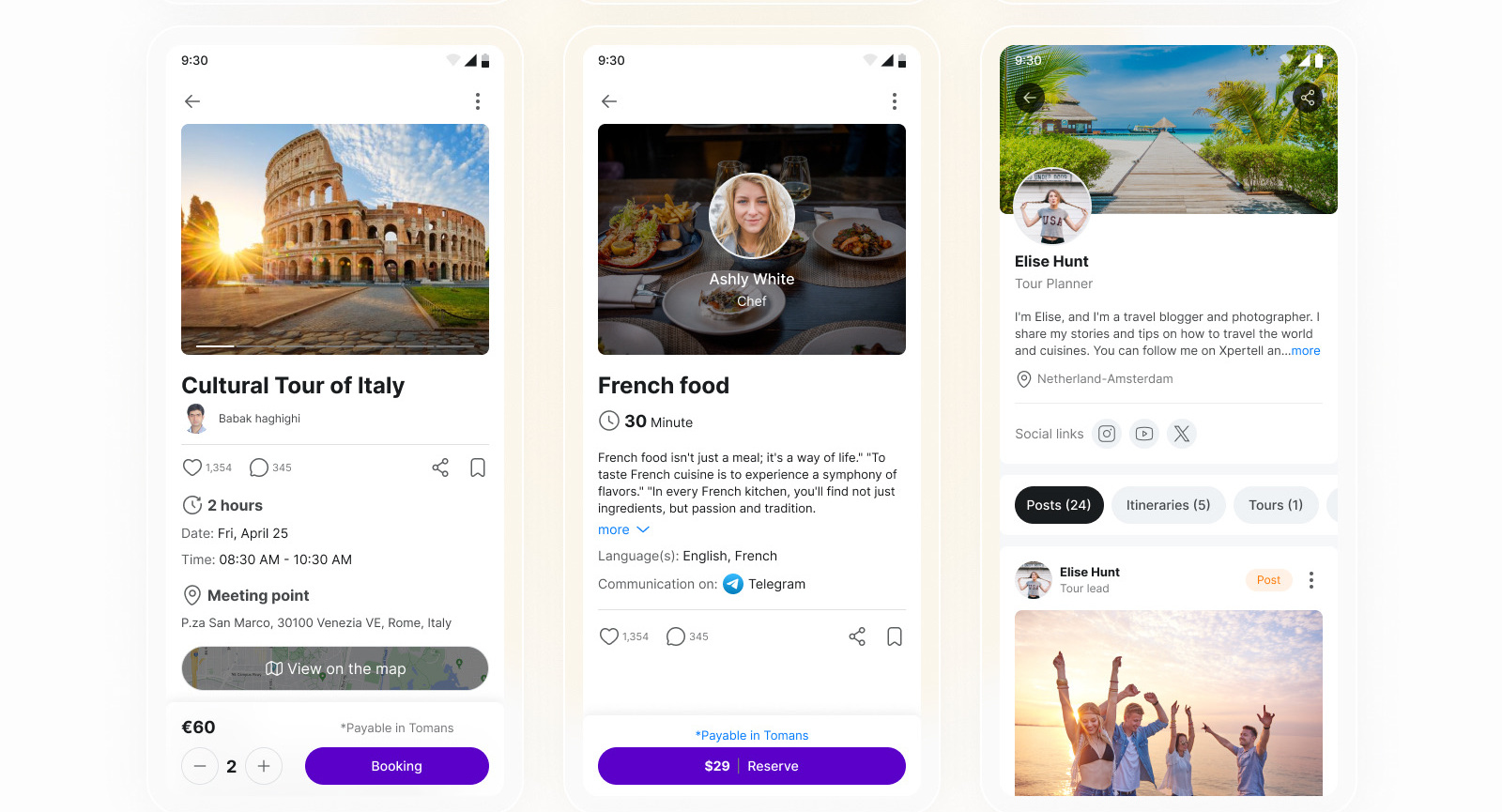
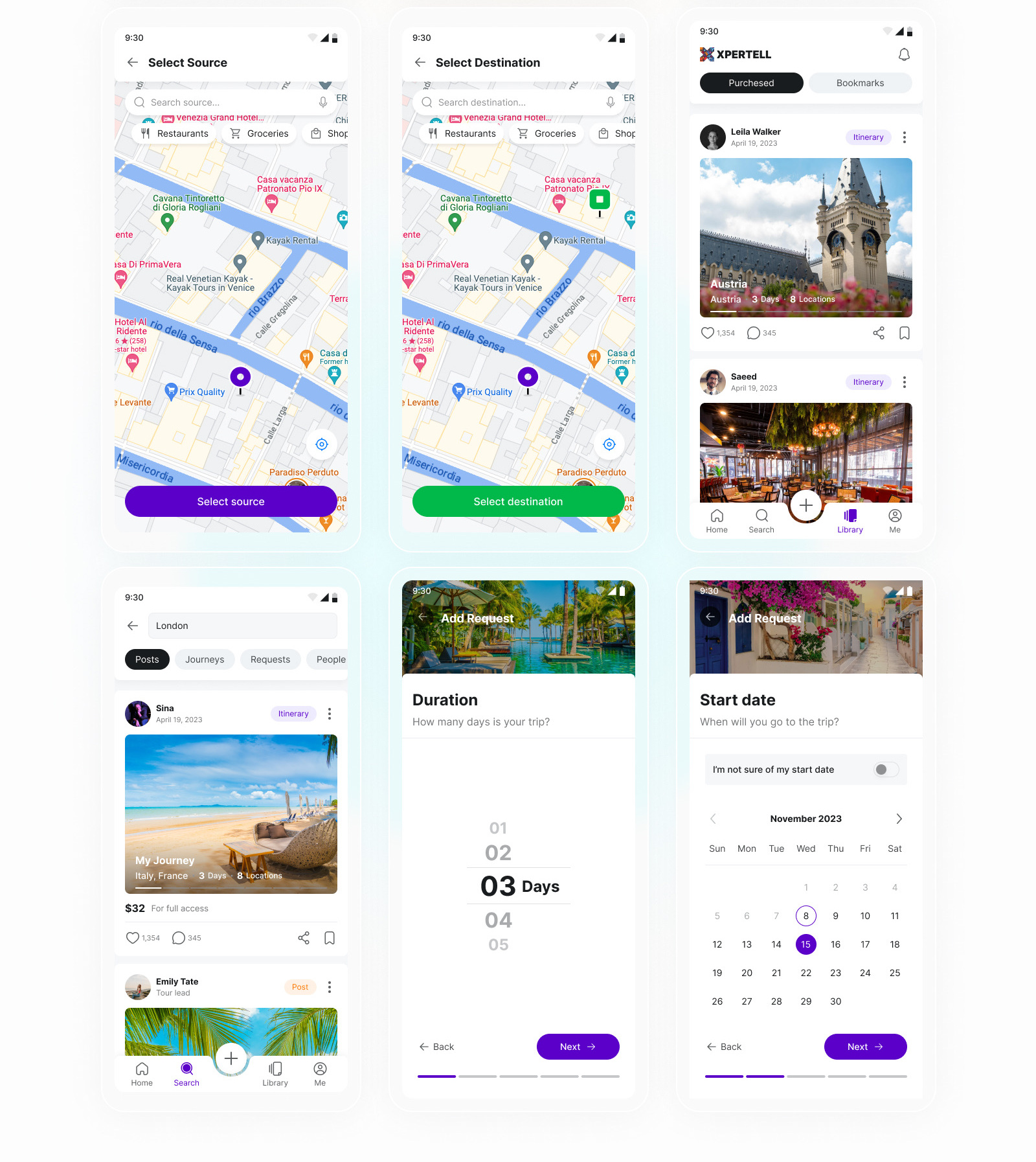
The final concepts make the strategy visible: discovering creators and stories, creating an itinerary, examining bookable tours and consultations, purchasing curated knowledge, and planning trips with a map-based editor.
These concept screens demonstrate the designed experience; they do not independently prove shipped functionality or business metrics.
Translating a business vision into a navigable product model, aligning a broad feature set around exchange of value, and using early usability evidence to identify where a critical creator workflow still needed work.
For a two-sided marketplace, compelling visuals are not enough. Both sides need a clear reason to participate—and the workflows that create, price, and access value must be simple enough to complete.